

KEKKON YUBIWA MONOGATARI
STATUS
COMPLETE
EPISODES
12
RELEASE
March 23, 2024
LENGTH
24 min
DESCRIPTION
Satou is a high school boy in love with his best friend Hime, an unearthly beauty from another realm. So when she moves back to her home world to get married, Satou doesn’t think twice—he follows her and crashes the wedding. Then, after a kiss from Hime, he suddenly becomes the new groom! But here, Hime is a Ring Princess and her husband is destined to be the Ring King: a hero of immense power.
(Source: Crunchyroll)
CAST
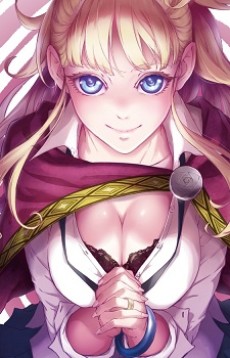
Krystal Nokanatika
Akari Kitou
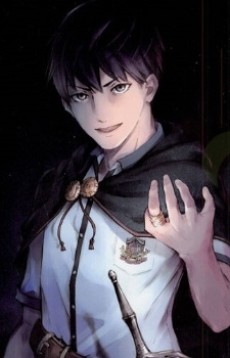
Haruto Satou
Gen Satou
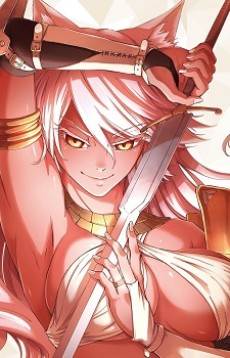
Granart Needakitta

Hitomi Ueda
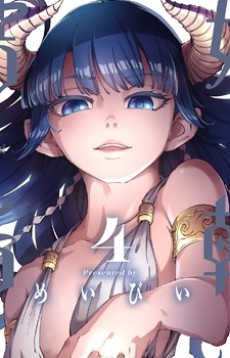
Saphir Maasa

Ai Kakuma
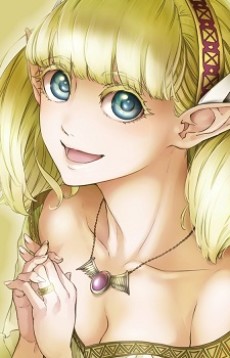
Nephrites Lomka
Miyuri Shimabukuro
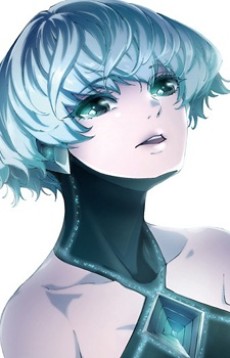
Amber Idonokan
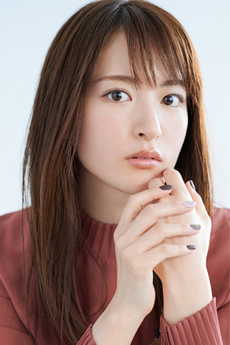
Mikako Komatsu
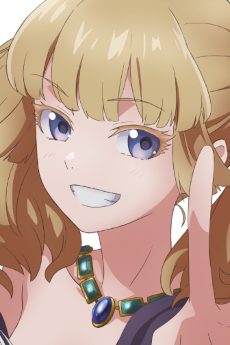
Morion Nokanatika
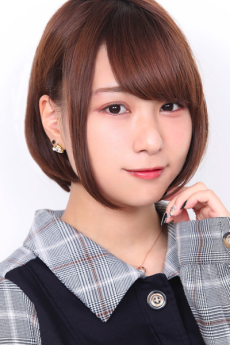
Miyu Tomita
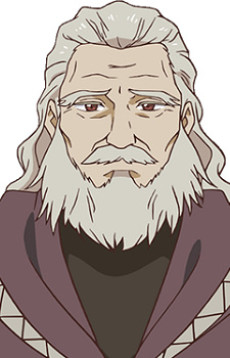
Alabaster
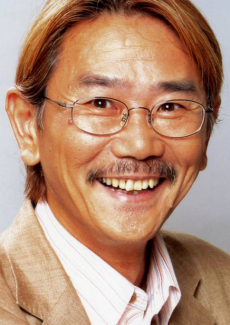
Shigeru Chiba
EPISODES
Dubbed
RELATED TO KEKKON YUBIWA MONOGATARI
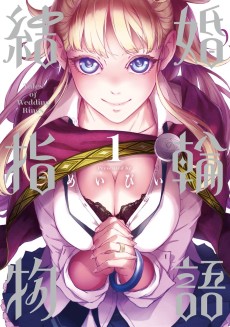 MANGA AdventureKekkon Yubiwa Monogatari
 ANIME AdventureKekkon Yubiwa Monogatari II
REVIEWS

Azzarrel
A failed harem anime with characters that absolutely do not want to be in a haremContinue on AniListPreface
I must admit I am a big sucker for harem anime and I don't even know why. I often find their tropes and pseudo-romantic narratives unappealing, where either the protagonist ends up with an unsatisfactory choice or the story halts abruptly without ever being finished. Yet, here I am, delving into another harem series, hoping for a different experience this time. Regrettably, this anime turned out to be as dull and uninspiring as one might suspect, but most notably even fails to deliver as a harem show. Frankly I made it as far as episode 9 solely to meet the 75% completion requirement necessary to write this review. So, let's delve into its shortcomings:
Primary Flaw: Why the Anime fails as a Harem
The narrative follows a young man and his female childhood friend and love interest, thrust into a fantasy world where he is forced into marrying multiple girls to gain power and combat a magical threat endangering the world. Both protagonists harbour feelings for each other from the outset, openly displaying disdain for the forced harem scenario imposed upon them. I would be surprised, shocked even, if the anime ends in any other way than with the main couple returning to Japan to pursue a life together. Yet, the plot insists on enforcing this harem dynamic, devoid of any real competition, seemingly designed only to evoke anxiety and insecurity in the main girl. While the secondary characters possess some likeability, they remain one-dimensional stereotypes. Why even make an harem anime if the main couple is so strongly opposed to it?
The Protagonist is insufferable
Even the anime acknowledges the protagonist's shortcomings, openly portraying him as weak and indecisive, contrary to the expectations of those around him. While his weakness is no necessary disadvantage in in environment that so oversaturated with power-fantasy plotlines and the anime attempts to at least salvage the situation by illustrating his growth and determination, albeit overshadowed by repetitive harem tropes, he still lacks any redeeming quality fit for the role of a main character. His most annoying qualities manifest in his constant surprise, often depicted through exaggerated, high-pitched screeching. Additionally, he single-handedly sabotages any meaningful romantic progression. Unlike typical harem anime where external factors disrupt intimate moments, here the protagonist constantly obstructs his own path to romance. He becomes flustered at the mere suggestion of any kind of intimacy, exhibiting perpetual awkwardness and insecurity. Despite near permanent advances, he consistently rejects invitation to physical contact not only from the other girls, but also from his love interest, while paradoxically engaging in scenarios like mixed baths with his harem without any issues.
Lackluster Fantasy Elements
Considering the genre, my expectations for the fantasy aspects were not high, yet I was still disappointed. Most settings revolve solely around the latest addition to the harem, presenting challenges for the protagonist to overcome, thereby winning the girl's affection before moving on to the next location. While there are occasional fight scenes, they fail to leave a lasting impression. The plot suffers from numerous holes, exemplified by a character's sudden disappearance for half an episode, only to reappear without any explanation.
Abundance of Ecchi Scenes
If you are solely looking for ecchi content - and for whatever reason do not have access to any hentai site - you are at least not gonna be disappointed in this regard. The harem girls exhibit little modesty, frequently wearing revealing attire or appearing entirely nude. The team's primary destination in every major setting is the mixed bath, where the harem girls relentlessly attempt to seduce the protagonist. The abundance of naked scenes is notable, with the protagonist's most remarkable feat being his unwavering commitment to maintaining his virginity throughout the series.
(Show is done now, so i can make this public again)

whatusername
An anime notable only for its insistence to murder any potential it has.Continue on AniListFirst of all, let's establish the baseline real quick. This anime is awful. The plot is very generic and filled to the brim with cop outs. The characters are uninteresting, with their prominent personality trait being "wanting to sleep with the MC". The animation is terrible, especially during the action scenes that are supposed to be the payoff for much of the plot, and just leaves the entire show unsatisfying. Even the ecchi part gets repetitive, as the only ecchi scenes to ever appear is the girls stripping nude or wearing lingerie, with absolutely no further development ever. Hence the 1/10 rating. Most hentai would be a better viewing experience than this.
What I do want to rave about in this review, though, is this anime's incredible insistence in destroying everything that could be interesting about it. Let's start with the premise:
wikipedia synopsis:
Satou pines for his childhood friend Hime. One day, she says she is moving away, so he follows her into a portal where she is about to be married to a prince. When a demon attacks, Hime gives Satou her ring, granting him light-based powers he uses to defeat the demon. She explains she is a princess from another world who lived on Earth for her own safety. Her world is under attack by demons and she was destined to marry a hero and pass her ring to grant him power.
The prince was supposed to be the hero, but Satou usurped his position. The ring is one out of a set of five. To become powerful enough to save the world, he must marry four other princesses and gain their rings to get power over four of the elements: earth, fire, air, and water.Now, the premise is already extremely lame. An isekai featuring a generic high-school protagonist with a god given harem destined to become extremely overpowered to save the world. However, we do have some ideas that could be interesting to see:
- For the MC it's an isekai, but for the main heroine it's an reverse isekai, maybe they'd have different perspectives to share about this situation?
- Since he has to pick up five princesses of five different nations, we would be picking up five people of differing expertise and differing perspectives who can provide their own contribution to the party.
- We would also be traveling across the world to see these nations as well, which would be a great opportunity for some world-building and for the MC to actually see the world he's fated to defend.
- The power of the rings is apparently dependent on the relationship he shares with the princesses, so we could get some good character building and relationship building here.

So what's the actual execution, you ask?
1: Not addressed for the first 10 episodes.
By Episode 11 Hime reveals that she's okay with her homeworld being destroyed and all her friends and family being killed as long as she and MC can be safe in this one. Yeah.

2: The first two princesses we pick up are complete dead-weights. Neither of them are capable of any physical fighting or any magic, and neither have any other expertise to offer. They don't even throw around their political weight as princesses. The third princess is a physical fighter and actually contributes. Unfortunately she can't contribute much as the fights quickly escalates to giant monsters and demon armies that are way out of her range. The fourth princess is a huge powerhouse that can transform into a dragon, but isn't allowed to transform because plot magic, so she's a dead-weight as well.

The fifth princess is a deus ex machina used to plot convenience the MC. Once her plot device expires, her biggest contribution is being a flashlight.

This is despite the fact that each of the princesses carries a magic ring as well, since they are meant to be wedding rings and thus in pairs. So the rings on the MC are able to conjure fireballs and tornadoes, but the rings on the princesses only function as lightning cables plugging the MC into his princess batteries.
That's right, in a premise where the main hero is entirely reliant on his party's support, his party is either completely useless, or rendered useless by the plot. Despite the fact there are already mechanisms in place that would allow them to keep up.
3: Most of the party's interactions with the rest of the world takes the form of incredibly idiotic isekai politics. Some highlights includes: the elf kingdom willing to allow the rest of the world be destroyed because they are allegedly protected by a magic barrier (it does not actually work);

The show straight up lying to the viewer and pretending a country was being occupied by a foreign force

(they are here only to help fight off the demons and leaves peacefully the next episode);

One of the nations sending their princess and the ring to a whole another world, that has demonstrably only been accessible by like, two people in the entire show, without ever informing anyone. The ring that, if they didn't have, would result in the world being destroyed.

Honestly it's almost like this world actively wants to get itself destroyed. Why are we saving it, again?
4: Similar to how the princess's power sets gets sabotaged once they join the party, their characters also completely deteriorate once they join the party. Pretty much all they do is try to get into the MC's pants, and get into pointless harem drama. I say pointless, because the MC constantly makes it very clear that he likes Hime the most, and that he's not planning to do anything to any of them until they save the world. In other words, there is already a winner at episode 2, and they are already announced that there will be no physical advancement of their relationships until basically the end of the series.
But that's fine. It's not like the MC is here only for their bodies. So what do the girls do?
The answer is nothing. None of the girls have any hobbies or anything interesting to say. Most of them do not contribute anything outside of plot required exposition dumps or trying to get into his pants. Hime in particular spends almost every single episode only ever talking about how she feels bad that other girls are being close to her man. You know, putting aside the fact that if they don't then the world ends. In fact, in the one episode where the party gets a break, instead of going off to rest or do their own thing, the party just stalks the MC for the episode.
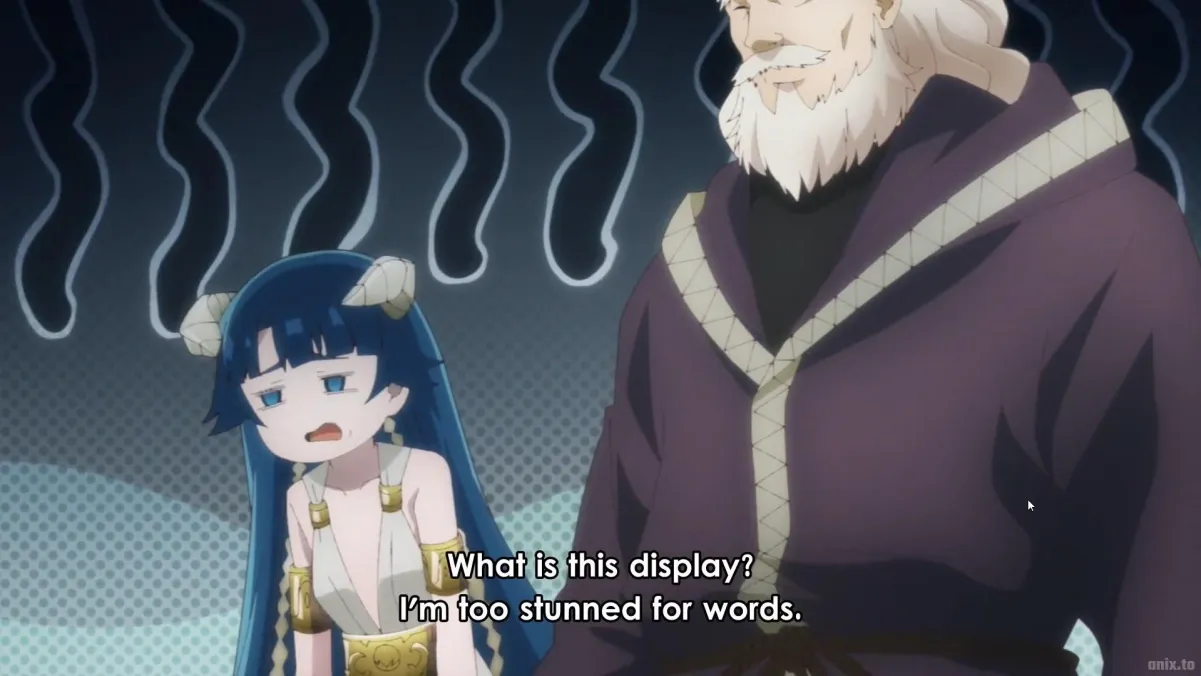
pictured: the only sensible person the whole show
The lack of effort on these characters slips into their character designs as well. For every character, despite the rapid shifts in the environment they travel through, none of them ever change their clothing unless it's into a swimsuit or lingerie. MC and Hime are particularly awful, as both of them wear their high-school uniform. For the entire season. Through a desert at one point. The exception is episode 11, where they get changed for about 5 minutes before Hime goes back into her high-school uniform and everyone else is shoved off-screen. These characters aren't allowed to express any personality through their design, and the personality they express through their speech and actions is about as much.
Premises can be really lame, but ultimately the thing that matters for writing prompts is the execution. While I certainly was not expecting an show that puts isekai and ecchi and harem in its premise to have some kind of award winning story, I also was expecting the show not to take all of its premises and run them straight into the ground. Honestly speaking, I'm quite looking forward to Season 2 just to see how much they won't let the girls do.

OtakuUnderground
LOTR as a flawed ecchi isekai with unimpressive action scenes and some weak writingContinue on AniListTales of Wedding Rings is an isekai romance anime based on a manga written and illustrated by Maybe. The show is centered around two teenagers, a boy named Satou and a girl from another world referred to as Hime. During the 10 years since Hime first arrived in his world, they developed a very close relationship with each other. One day they decide to go to the summer festival where Hime tells Satou that she and her grandfather are going back home. On the night of Hime's departure, he notices a bright light in the sky and sprints outside to stop her. She then tells him the truth about being from another world and that she's getting married. Blindsided by this news he rushes through the gate to her homeland Arnulus and crashes the wedding ceremony. When the venue is suddenly attacked by a monster, Hime quickly kisses Satou, thus making him her husband and bestowing upon him not only the mantle of "Ring King", but also the Ring of Light. As the Ring King, Satou is tasked with sealing away a powerful evil entity known as the Abyss King who was defeated once before by his predecessor. In order to save Hime's world from the Abyss King, Satou must obtain the remaining Rings of Power from the four Ring Princesses that reside in other nations. Accompanied by Hime, her grandfather the "Great Sage" Alabaster, and Marse, her former betrothed, Satou embarks on a quest to gather the rings before the Abyss King is fully resurrected.
This show boasts a distinctive premise that strikes a balance between familiarity and uniqueness, setting it apart from the multitude of isekai series that have saturated the landscape. Maybe has taken the cliché genre trope of the legendary hero prophecy and made it more interesting by injecting new elements into it. I was immediately intrigued by the concept of this anime when I first learned it was in production last year. An isekai adventure series centered around marriage is something I've never seen done before. Besides its originality, Tales of Wedding Rings has a nice setup that establishes the close bond the main pair have with each other before they venture out into the other realm together. This is very much a "childhood friends to lovers" kind of story, but in this case there is a sudden shift in the relationship between the two primary leads due to the circumstances of their situation. As a result, their transition into newlyweds is way more awkward than that of couples portrayed in conventional romance narratives. There are some amusing moments that arise due to their mutual nervousness during a few of the scenes they share alone together. In general, the interactions between Satou and Hime were delightful and its easy to believe that these two truly care for one another.
For the most part, the author has written these protagonists fairly well. Maybe used several archetypes as the basis for these characters while giving them enough personality and depth to make them appealing. For example, Satou is a mix between the typical every-man and standard hero archetypes. That being said, he isn't just some shallow self-insert character designed to easily fit a certain mold. He has a distinct identity and isn't simply a surrogate for the audience. Satou is driven by his profound sense of duty and his undying love for Hime. Initially, his unwavering commitment to her is the primary factor motivating him to save Hime's world. However, Satou's resolve is strengthened when his perspective on her homeworld changes after meeting various people on their journey. Unfortunately, Satou's lack of power frequently impedes his efforts to fulfill his duty as Ring King throughout the season. That said, what I found so endearing about this character is his sheer tenacity and ability to persevere even when the odds are stacked against him. I don't have too many issues with how Maybe wrote him apart from a couple instances where he has Satou behave idiotically for the sake of bringing levity to a scene. Objectively speaking, there's a minor flaw regarding how he's characterized at one point, which I'll touch on a bit later. Overall, I think Satou is a decent protagonist that has some admirable qualities to him and is distinguishable enough from other run-of-the-mill isekai leads.
Regrettably, Hime is a much simpler, less compelling character than her valiant other half. She completely fits "the lover" archetype to a fault as there isn't a lot to her character outside of her desire to be happy with Satou. Hime's focus shifts from her responsibilities as a ring princess to her relationship with Satou fairly quickly. As one might expect, she isn't keen on the idea of Satou marrying other women early on in the series and it isn't long before she starts getting jealous. While Hime doesn't evolve significantly over the course of the season, she at least grows enough to accept the fact that she can't have him all to herself. She becomes less envious of her husband's other wives, but never forgets to assert herself as his "number one". All things considered, I don't think Hime is a bad character, but she's not given a whole lot to do outside of powering up Satou with a kiss, which is a duty inherent to all the ring princesses. The Wind Ring Maiden, Nefritis Romca, doesn't do much either, but she's a way more rounded character that has much more going on with her during the early stages of the story.
Nefritis is a shut-in princess from the elven village of Romca governed by her overprotective brother Jade. Initially, she is very timid and afraid of both strangers and the world outside the palace walls. At the same time, Nefritis has developed an insatiable curiosity about the outside world and yearns to explore it, but is unable to for multiple reasons I can't get into due to spoilers. The author uses this character to highlight and contrast Satou's remarkable courage and self-confidence with her fear of the unknown and shyness around new people. Nefritis exhibits the most substantial amount of growth out of everyone in the cast and is arguably the most complex character in the story.
Conversely, the fire nation princess, Granart Needakitta, is a fairly straight-forward character, practically devoid of any actual depth or substance. She's essentially just a horny musclebrained warrior who wants to make babies with Satou. Prior to joining Satou's group, she led a nomadic nation of cat people and was their strongest fighter. Granart's combat prowess allows her to play a more active role during encounters with the Abyss King's forces unlike Hime and Nefritis who just watch from the sidelines. Outside of battle, there are many light-hearted moments between her and the main cast that were very amusing. All in all, while I liked Granart and appreciate what she adds to the group, I do wish that the character wasn't so paper thin.
The water ring maiden, Saphir Maasa, is a good foil to Granart and is way more fleshed out by comparison. While she may not be as physically fit or as strong as her, Saphir is far more intelligent and cunning than Granart. This character kinda balances out Satou's growing harem as she isn't really interested in him unlike his other marriage partners. In fact, her attitude toward Satou and the way in which she's introduced was actually refreshing. When they first meet Saphir is more concerned over the fate of her country and the marriage is basically a means to an end in her eyes. Although I don't have any issue with how Maybe wrote this character, similar to Satou, I feel as though he slightly mischaracterized her at one point. There's a scene in the ninth episode where a merchant describes her as a "wise tomboy", which struck me as odd because she doesn't behave like a boy at all. I initially assumed this was a poor translation when I initially saw the scene in Japanese months ago, so I surprised to see it was in the English dub version too.
The instance involving Satou earlier on in the show is a bit worse in my opinion. Near the end of episode four, there is a scene where the elder elf Peridot is talking to someone about Nefritis. She describes him as being meek, which I don't think is accurate at all. While Satou isn't the argumentative or confrontational type, he is by no means submissive or spineless. There was never a point in the narrative where he struggled to speak his mind about a situation. Sure, he's kind-hearted and even-tempered, but Satou's also pretty strong-willed too. The fact that he didn't conform to what his friends were telling him to do in regards to his courting matches with Granart is evidence of that.
Unfortunately, there are far more egregious flaws with the writing than these minor nitpicks. For starters, there is a major plot hole and some pretty glaring plot convenience surrounding the final ring princess Amber Idanokan. I can't say too much about this character or go into too much detail without venturing into spoiler territory, so I'll be vague first before I elaborate for those familiar with the series. To put things simply, Amber's course of action prior to meeting Satou and Hime is illogical given that the Ring King was never supposed to come from Satou's world. This is most I can say without spoiling things for those who haven't watched this show yet, so with that being the case, I need to briefly get into a bit of spoilers to expand on this fault within the narrative.
Anyway, the plot hole in question derives from the reveal that Amber had been waiting for the ring king in Satou's world for centuries. She was brought !to his world by the dwarves to keep the earth ring safe, which is a totally rational move on their part. However, Amber's decision to stay there and wait for the ring king to arrive makes absolutely no sense considering the fact that Marse was originally supposed to take up the mantle prior to Satou coming to their world. The ring king was never supposed to arrive from another world, so its illogical for Amber to expect someone to suddenly show up there. Amber's revealed to have the power to open a gate between their worlds, so why didn't she go back to her homeworld and search for him after all this time? Moreover, if certain events didn't happen beforehand, they might've never gotten a chance to meet her at that location, which would've drastically impacted the finale and essentially ruin the rest of the story. I'm hoping they'll address this in the second season by revealing that there was more to the legends or something, but for right now this is a glaring example of bad writing.
Another notable flaw with this show's plot involves the black rings introduced in the fourth episode. These mysterious items are used by the Abyss King to take control of someone and transform them into a powerful warrior referred to as an abyss knight. While visiting the different ring nations, Satou's group is eventually attacked by one of these soldiers that were sent there to steal the rings of power. Although I like the idea behind the black rings, there were a few instances where these items are inserted into story in a way that feels contrived, for lack of a better word. For example, there's a scene in episode six where a jealous knight walks into a room and puts on the black ring that he happens to finds on the floor. Why was the ring just lying there waiting for someone to pick it up? Its never explained how it got there or established that the Abyss King can just plop them anywhere he pleases. Even if we're to assume he has the power to do so, in a couple of cases the appearance of these vile rings seemed awfully too convenient. Overall, the setup for some of these abyss knight's could've been handled a lot better.
In general, the antagonists aren't anything to write home about, but they serve their purpose within the narrative well. That said, there is one part of the story that could've been better if the villain wasn't so obvious from the moment she first appears. As for the main antagonist, the Abyss King, he's built up as this major threat throughout the season, but he doesn't get a whole lot of screen-time, so viewers don't get to see him do much. While the character came off as bland to me, I appreciate how he's kinda like an omnipresent evil force constantly sending his minions to hinder Satou's quest to collect the rings.
Anyway, Tales of Wedding Rings' narrative moves along at an acceptable pace with only one episode not progressing the story too much. Season one's story can be broken up into five parts or narrative arcs that only last a few episodes each. The first couple episodes establish some of the cast and setup the main conflict involving the Abyss King. Each new arc introduces one of ring maidens and showcases a different part of Hime's world. In terms of worldbuilding, Maybe does a pretty good job expanding on the different countries Satou's party visits through various bursts of exposition that thankfully don't last too long. Writing-wise, I think the first-half is a lot stronger than the latter portion of the season. Taken as a whole, the last six episodes are slower, a bit predictable, and the climax is brought down by the plot issues I've mentioned previously. With that said, I still enjoyed a lot of the comedy and the more serious character moments in the last batch of episodes. The finale may not have been amazing, but it at least properly set the stage for the second season and it had the best action scene in the series so far--though if I'm being honest ain't saying much.
Although the story isn't the greatest, the characters are used effectively to help solidify its core themes for the viewer. The author heavily emphasizes the themes of personal responsibility and self-sacrifice throughout the narrative. Tales of Wedding Rings is littered with instances where an individual willingly relinquished something for the sake of someone else. Moreover, the burden of responsibility is a recurring theme that Maybe explores through Satou, Hime, and the majority of the ring princesses. Ultimately, I believe the story's central message is that a person's happiness doesn't have to come at the expense of neglecting one's duties. While the author does a decent job handling the narrative's themes, I thought he could've done more to examine them with characters like Granart and Nefritis.
Putting aside its narrative themes, the production quality of this anime is largely unimpressive. Generally speaking, there's a noticeable absence of stylistic flair in how scenes are presented to the audience. For example, the cinematography for most of the action sequences is flat and unremarkable. These scenes could've benefited from more dynamic camera work and were typically mediocre both in terms of execution and how the combat unfolded on screen. The action itself is quite rudimentary with characters often attacking and dodging in a rather straightforward manner. These sequences could've been way more captivating if the fight choreography was more creative and elaborate.
Anyway, the weakest aspect of the production is by far the animation. While it's pretty decent for the non-combat scenes, the animation quality for the fight sequences is way more inconsistent. It usually dips whenever a character is landing a massive strike or when certain attack spells are used. During these moments, the studio halts the action and briefly stays on a singular shot. Sometimes the animation will be limited with little to no camera movement. In other cases, the studio will use a static image and just move the camera a bit. This is such a boring way to present the action and one could argue that it's detrimental to the pacing of the battles, given that the flow of these scenes is interrupted temporarily.
The one saving grace in regards to the presentation is the visuals. I really dig the art style of this anime, which is reminiscent of Staple Entertainment's previous work, Am I Actually the Strongest? The beauty of this show is most apparent in scenes flooded with light, allowing for numerous aesthetically pleasing shots. Its within these well-lit scenes that the artwork for the characters can truly shine. Generally speaking, the character designs for the ring maidens are solid. On the other hand, some of the monsters didn't look too good and some of the CG effects--especially a couple in episode eight, stood out like sore thumb.
Before I close this video out, I need to address the abundant amount of fan service scattered throughout this series. This is one aspect of the show that is sure to turnoff folks who hate seeing a lot of sexualized imagery and nudity in their anime. While it's not overdone to the point that it becomes a distraction or detracts from certain moments, there's enough here that could've been trimmed in favor of developing the characters more. That being said, for those that like this kind of ecchi content, you'll surely be satisfied with what this anime has to offer on that front.
As a whole, Tales of Wedding Rings is an entertaining, but very flawed fantasy series with a unique concept and fun characters. As much as I liked this anime, it's tough to give this one a glowing recommendation given it's lackluster production, subpar action scenes, and copious amounts of fan service among other things.
SIMILAR ANIMES YOU MAY LIKE
 ANIME ActionKenja no Mago
 ANIME AdventureHachi-nan tte, Sore wa Nai deshou!
 ONA FantasySeiken Gakuin no Maken Tsukai
 ANIME ActionFutoku no Guild
SCORE
- (2.95/5)
TRAILER
MORE INFO
Ended inMarch 23, 2024
Main Studio Staple Entertainment
Trending Level 4
Favorited by 742 Users
Hashtag #結婚指輪物語