
TAKOPII NO GENZAI
STATUS
COMPLETE
EPISODES
6
RELEASE
August 2, 2025
LENGTH
23 min
DESCRIPTION
A Happy alien, Takopi, lands on Earth with one mission: to spread happiness! When he meets Shizuka, a lonely fourth grader, he vows to bring back her smile using his magical Happy Gadgets. But as he uncovers the pain in her life, Takopi learns that true happiness may require more than gadgets.
(Source: Crunchyroll)
CAST
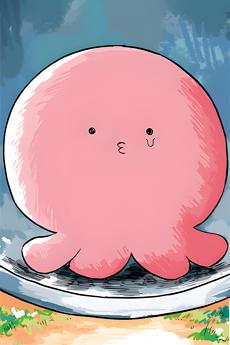
Takopi

Kurumi Mamiya
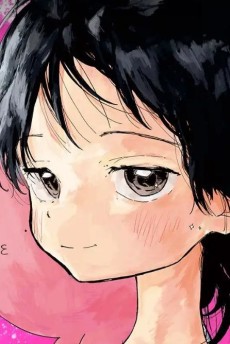
Shizuka Kuze

Reina Ueda

Marina Kirarazaka

Konomi Kohara
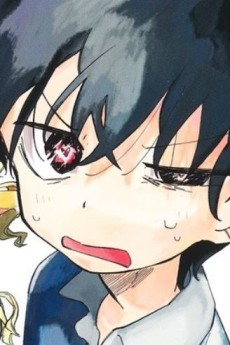
Naoki Azuma
Anna Nagase
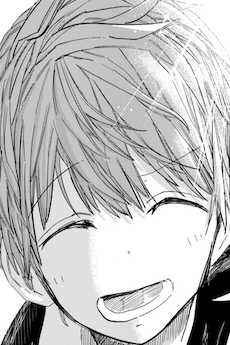
Junya Azuma
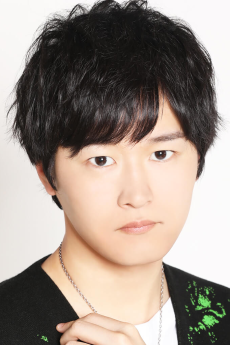
Ryouta Oosaka
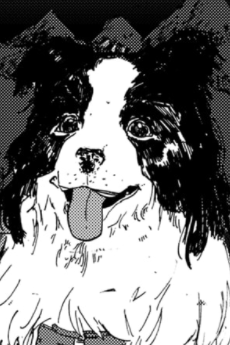
Chappy

Natsumi Fujiwara

Marina no Haha

Ayumi Tsunematsu

Happy Mama

Mamiko Noto

Sensei

Mari Hino
Marina no Yuujin

Asaki Yuikawa
Marina no Yuujin

Hiyori Kouno
Marina no Yuujin

Niina Nakabayashi
Marina no Yuujin

Natsumi Kawaida
EPISODES
Dubbed
RELATED TO TAKOPII NO GENZAI
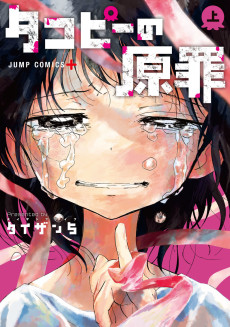 MANGA DramaTakopii no Genzai
REVIEWS

ZNote
The tragedy of violence as rationalization for personal survival and control. But hopefully…Continue on AniList(Video includes audio. Be sure to unmute) In 2012, director Joshua Oppenheimer directed a film called The Act of Killing. In the course of the documentary, Oppenheimer interviews perpetrators of the 1960s mass killings of alleged communists and those who opposed the New Order regime in Indonesia. There’s a paralyzing, depressing candidness with which the killers (many of whom at the time still retained power of some sort decades later) describe the killings they committed, sometimes citing violent movies as inspiration, and in how they go about casting people to re-enact the murders. It’s as though they’re trying to evoke memories of a better time through recollection and fondness defined by bloodshed and spiritually recreating it. In juxtaposing this candidness with both reality and surreality, the film makes the case that the people who carry out such horrified actions are not monsters in the abstract, but human beings. Given the right circumstances (such as backing by Western governments), they will manifest, flourish, and linger. We cannot say “Father, forgive them, for they know not what they do” when they most certainly know what they did, and seem to celebrate it.
But therein lies an important distinction – staring in the face of evil is not the same as condoning evil. It’s the kind of space that allows media to depict truly unpleasant subjects in ways that, at least hopefully, demonstrate a clear difference between what occurs in the text versus the intent behind the action. Takopii’s Original Sin, as directed by Iino Shinya, relies on its audience understanding this distinction and navigating through the gross inhumanity of everything inflicted by responding with revulsion. When Marina laughs at Shizuka’s expense, or Azuma’s mother spews such disparaging words of unacceptance, or Shizuka’s lips finally curl into a sincere smile as something horrifying transpires, the show does not argue that these are good things. If it truly wanted to advocate that violence was the ultimate solution to the characters’ problems, it wouldn’t spend so much of its time having those same characters disgustingly and grotesquely falling further and further into their own deep, dark whirlpools. For the viewer, it’s violence absent catharsis. Every punch, slash, self-affliction, and emotional manipulation makes the characters wholly commit to their own atrocities, all while making them mistakenly think that salvation lies at the other end of the tunnel vision.

(Credit to Saitou Keiichirou, the director for Bocchi the Rock! and Frieren for the animation clip, and Iida Yuichiro for the key animation frame. Shinya’s direction frequently calls for warped perspective and a consistent tonal unease, a visual manifestation of how the narrative keeps the children in its uncertain center) It’s not difficult to understand why these children would internalize to such an extent that this is the case, as such an ideology is not born from nowhere. With the overwhelming presence of violence in the children’s everyday lives from those who are supposed to take care of them, a seemingly immutable truth is conveyed: violence is the response to circumstances beyond a character’s control, a survival strategy born from malice and for the purposes of self-preservation. It is witnessed through the parents seeing the world they want to have crash all around them and not knowing any healthier ways to channel that frustration beyond the end of their sociologically stunted fist or broken glass bottle. Violence, however revolting, allows them to have a degree of control over something markedly more helpless. It is not that the children are the actual cause of the adults’ problems (or in the context of Marina, Shizuka as the cause), but it’s that they’re within the closest proximity. It’s mapping a despairingly simple solution onto a complex problem, and that by doing so, things supposedly don’t have to be so bad. Inflict violence on another person who is reasonably within your reach, and it makes you, your convictions, and your life better.
(Credit to Kojima Takashi. The adults in Takopii’s Original Sin are always positioned as the main instigators for the children’s worldview and destructive impulses, instilling that violence against those who are weaker than yourself is somehow an acceptable solution for problems that they cannot necessarily control) Takopii, the adorable little pink octopus alien, bears witness to this deliberately misapplied, abjectly horrific simplicity. Themselves a simple creature with a mystifying sense of misunderstanding human concepts or morality, their initial mission to help Shizuka smile (unable to because of the victimization by Marina) primes the audience for their subsequent bludgeoning. The disquietingly naïve outlook Takopii has deliberately contrasts with the cold reality that Shizuka lives in every day, situating the story tonally in a continuous suspense. Laughter that the show produces tends to be more from discomfort and foreboding than finding something genuinely funny, admittedly a small levity.
Takopii’s involvement is the ultimate glue that keeps the story’s cohesion. As Takopii violates their own cultural taboos to help Shizuka survive, they themselves embody the perspective of the outsider, taking it upon themselves to makes sense of the seeming senselessness of it all, like a news anchor inevitably asking the same old question about the newest American school shooting. They react with panic and horror, experiencing for themselves how far gone some of these characters are in their violence-inducing worldview. Without such responses, it would be easy for the series to fall into its abyss and never recover. In part because the show on the whole is animated so vividly, even in moments where something is implied off-screen, Takopii’s Original Sin comes dangerously close to poor taste, excessive purely for the sake of shock. The bluntness of each blow (and the affect on the dramaturgy) is held back from truly unobstructed impact by Takopii’s own sense of the conflicts. Almost Brechtian in how it forces the audience to see this particular world as it is, it makes the case that each child and Takopii is a multifaceted creation of their environment, taking on new “roles” in the story as time is reset or as Takopii’s understanding grows ever thornier. Even down to its seemingly magical resolution, the final intent is not about fostering hopelessness, but demonstrating that it is precisely through moving through alienating action as witnesses that empathic connection is even possible.
(Credit to Oshima Touya. Takopii’s refusal to give up and always find some kind of way to help or understand, even as circumstances get increasingly more dire or drastic and they themselves feel fear and panic, stops the story from falling off the cliff altogether, even if some of their ideas are misguided because they’re missing key pieces) In that spirit of empathic connection, Takopii’s Original Sin is not a contest of “who suffered more / who should I feel more sorry for” or whose punishment is “deserved / undeserved.” The questions may have a way of unintentionally sneaking up because of the show’s overall structure. The anime’s (and the original manga’s) short length simultaneously lets the story maintain its tight focus on a select few people to highlight its destructive path, as well as minimize the chance of overusing its own contrasts. The consequence of this though disproportionately highlights the actions of certain characters, giving the appearance of certain children embodying the classic image of The Antagonist™ more than others. The story wants to show Shizuka, Azuma, and Marina as victims of the same generalized imposition, and it does, though some of the narrative's later attempts to do this pass as rapid overcorrections moreso than intended.
(Credit to Saurabh Singh) Takopii’s Original Sin never could have fully broached the broad subject of violence in only six episodes. There’s perhaps even something to be said for the fact that it didn’t necessarily delve far enough into the particulars of the how or when the parents and children concluded that they should be violent themselves. Less physically gruesome viscera, more mentally gruesome viscera. Would the story be stronger if it had done so? That possibility exists, at least in the abstract. But when you cannot settle for addressing the whole of an issue, sometimes the best approach is to hyperfocus on one element in particular, and as the old saying goes, actions speak louder than words. The irony is that the story, in a sense, wounded itself so that it could give the subject the justice that it deserved. Considering the story’s ending, there’s a bizarre poeticism to that. The series made its choice – children as abuse victims processing that abuse through inflicting abuse, on each other and themselves alike, as coping mechanism.
The Act of Killing made the point of saying that if real people could slaughter hundreds of thousands simply for being suspected communists or sympathizers, and that the violence they committed could be rationalized as acceptable, then there might be no depths to which people will not sink. Yet even in the midst of its examination of “humanity rejection,” it also made the case through one of its participants, Anwar Congo, that not only is an end to the personal glorification of violence possible, but that it can seem like magic unto itself. That, itself, is also human. Takopii’s Original Sin shows bluntly how despairingly grotesque violence is inflicted, internalized, and inflicted again, a cycle that can only break through understanding and a seeming miracle taking place, however it manifests. If a naïve pink octopus alien can understand that everyone loses in violence like this, especially children, then maybe things don’t have to be so bleak after all.
(Credit to 10+10 / tentoten) *CLICK!* 
melamuna
A Viewer’s Guide on Trauma & PsychopathologyContinue on AniList
__Note:__
_This review includes speculative discussion on characters' mental health, not professional diagnoses. Interpret these insights not as a clinical assessment._ ***

When you look back at older anime aimed primarily at children, a familiar pattern often appears: young protagonists accompanied by an otherworldly creature—typically cute, marketable, and designed to comfort or guide the child through everyday slice-of-life adventures. One of the earliest and most iconic examples of this formula is Doraemon. These shows are filled with light-hearted moments and a soft, optimistic outlook on life, often conveyed through the cheerful presence of these adorable companions.
But what happens when that formula is turned on its head? What if the optimism of these cute characters isn't uplifting, but instead enables a distorted or even harmful view of reality? What if the philosophy of "I'm doing my best to keep you happy" is, in fact, deeply flawed? ***

Don’t be fooled by Takopi’s Original Sin’s beautifully animated visuals, bubblegum-sounding opening, and Takopi’s (Kurumi Mamiya) bright optimism. Beneath its vibrant aesthetic lies a deeply unsettling narrative that explores the darker spectrum of life and emotional distress.
At the beginning of the series, we follow Takopi as he encounters Shizuka (Reina Ueda), a girl who seems devoid of joy and spirit. Takopi takes it upon himself to “fix” her, hoping to transform her into the happy-go-lucky person he envisions. But as he quickly discovers, healing someone’s pain isn’t that simple. Shizuka is clearly struggling with depression, shaped by her upbringing and how people inflicted her. Her behavior, even Takopi’s in response, becomes increasingly affected by the emotional weight she carries. As the story progresses, Shizuka’s actions begin to reflect antisocial traits, including a lack of remorse.
We also follow other characters with equally complex emotional landscapes. Marina (Konomi Kohara), who plays the antagonist to Shizuka, has a painful backstory of her own. Her aggression and displacement toward Shizuka emerge as coping mechanisms from her family trauma. Then there’s Naoki (Anna Nagase), an intensely anxious child with destructive obsessive thoughts induced, adding another layer to the tangled web of trauma.
This series doesn’t follow a straightforward arc where emotional wounds are healed by applying simple solutions. Instead, it reveals how complex—and sometimes dangerous—emotional interventions can be. Takopi’s attempts to help Shizuka, while well-intentioned, often result in unintended consequences. Trying to fix one part of her life only leads to new, often worse, complications.
Takopi’s Original Sin presents its world through a cynical lens, where every character seems to carry the scars of a damaged upbringing—often inflicted by the very people meant to protect them. If there's something you wish to fix, the story suggests it's a near-impossible task, requiring not just individual change but the healing of an entire community or family tree. And even then, that healing is anything but simple. The show is emotional, painful, and difficult to watch, especially as it follows children—some not even in adolescence—enduring both physical and mental abuse, leaving them with psychological wounds that feel beyond repair.
The series paints a heartbreaking picture of broken children in a broken world—an unfortunate reality for many children globally who are denied the luxury of a carefree childhood and instead bear the emotional weight of trauma. From its very first episode, the story plunges viewers into an agonizing journey. However, despite the series’ powerful start, the ending didn’t quite land for me. While it’s by no means bad—in fact, it’s quite respectable (especially Naoki’s resolution)—it lacked the same emotional impact and narrative force that made the beginning so gripping. ***

Takopi’s Original Sin is an anime that deconstructs a familiar trope, revealing a much darker and more cynical outlook on life. Emotions run high throughout the series, and its heavy themes hit with such intensity that it becomes difficult to watch at times. Truly one of the most unique anime that had come out this year. Would I watch it again? probably not, and yet, even if you're not a fan of this material, you'd still find a fascination over its deconstructive formula and a captivating hook in it's story. ***

TheArbitrator
TAKOPI? no baby give me some TRAUMA-PIContinue on AniListThank God, finally it’s over, or at least that’s what I keep telling myself.
I am genuinely tired after finishing the anime, wretched even, but I think that's alright. I never watched this show for some cute, happy feeling anyway. I knew what was coming, but man, it still hit bad. I'm not here to critique the show, honestly, so sorry about that. I just want to get my feelings out and talk about it, because this... this felt hard.
You go in thinking you're prepared. You see the cute, pink, Kirby-looking octopus alien and you know it's a trap. It’s like seeing Kyubey from Madoka Magica for the first time; a part of your brain, the part that’s been hurt by anime before, just screams ''RUN'' The show even gives you two content warnings at the start, which is basically the anime equivalent of a bouncer telling you, "You sure you want to go in there, pal?" But you do it anyway. Because you have to know, you want to know, you are already too deep.
The whole thing starts as this twisted parody of Doraemon. You have the helpless kid, Shizuka, and the magical friend from the future, Takopi, with his pouch of 'Happy Gadgets' But this isn't about getting better grades or standing up to a neighborhood bully. This is a world of soul-deep neglect and abuse that feels so real it’s suffocating. And Takopi, with his simple, happy brain, just makes everything a million times worse. His attempts to help are pure chaos. He gives Shizuka a 'Happy Ribbon' to mend friendships, and she uses it to hang herself. The camera just stays on her, lifeless, and in that moment, the show looks you dead in the eye and tells you there are no easy fixes here. There is no magic that can patch over this kind of pain.
From there, it just descends. It’s not a slow burn of psychological horror like Oyasumi Punpun; that story is a surgeon's scalpel, meticulously dissecting a soul.
The whole environment is a non-stop barrage of misery that just keeps going, never giving you a moment to breathe. The visual style is a huge part of the pain. It’s this constant whiplash between Takopi’s original sin's soft, storybook world and the grim, dirty, dead reality the kids live in. It’s like if A24 decided to do a gritty, psychological reboot of Barney & Friends the dissonance is the point, and it makes the horror feel so much more violating.
What really wrecks you is that there are no real monsters. Not among the kids, anyway. It’s like Lord of the Flies, but the island is generational trauma and the beast is the complete and utter failure of every single adult in their lives. You hate the bully, Marina, with a passion, but then you see her home life, and you realize her cruelty is just a distorted echo of the abuse she suffers from her own mother. You see the good boy Azuma, so starved for love that his mother making and then taking away his favorite pancakes because he didn't get a perfect score on a test is enough to break him. They’re all just children, hurting each other because they’ve been hurt, and it’s a cycle that feels impossible to escape. It’s a different kind of darkness than something fantastical like Berserk. That’s a nightmare you can wake up from. This feels like it could be happening down the street, and that’s what makes it so much harder to stomach.
9.5/10 will never watch again
SIMILAR ANIMES YOU MAY LIKE
 MOVIE DramaKoe no Katachi
 ANIME DramaSteins;Gate
 ANIME ActionSummer Time Render
 ANIME ActionWonder Egg Priority




SCORE
- (4.35/5)
TRAILER
MORE INFO
Ended inAugust 2, 2025
Main Studio ENISHIYA
Trending Level 12
Favorited by 5,360 Users
Hashtag #タコピー #タコピーの原罪