

TAIYOU NO IE
STATUS
COMPLETE
VOLUMES
13
RELEASE
March 24, 2015
CHAPTERS
70
DESCRIPTION
As a child, Mao spent all her time at Hiro’s house across the street. Going to his house always made her feel cheerful. A few years later, Mao’s father gets remarried and Mao finds herself with nowhere to call home. Hiro ends up letting her stay with him in the house he’s been occupying alone since the death of his parents. A love story unfolds, between two childhood friends of different ages.
(Source: Kodansha USA)
Note: Includes 20 extra chapters.
CAST
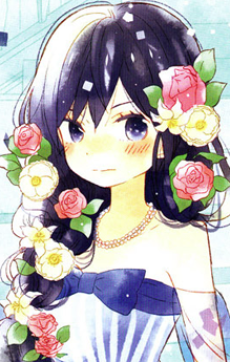
Mao Motomiya
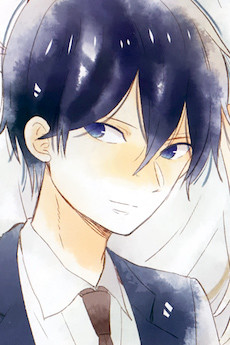
Hiro Nakamura
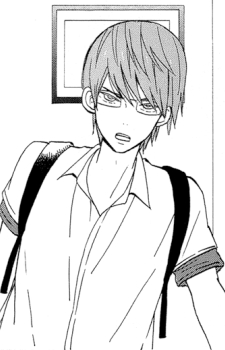
Daiki Nakamura

Ai Sugimoto
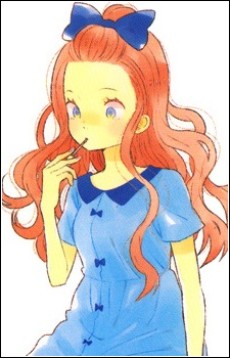
Chihiro
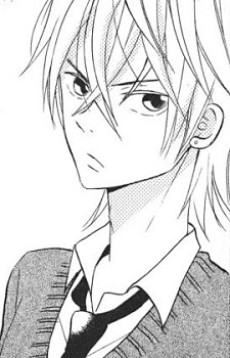
Oda

Hina Nakamura

Croquette

Wakaba

Kaitou Motomiya

Otoha

Aoi Matsumoto

Yuzuno Hironaka

Yui Motomiya
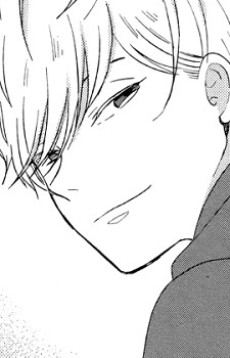
Rui Kondou

Fujita

Kokoa

Date Masamune
CHAPTERS
REVIEWS

GGShang
A story that is as warm as it's title suggestsContinue on AniListI always had the feeling that House of the Sun was a good manga ever since I finished it, but I was never really sure if it was justified or not since I didn't sit down to think about it too much. So when I wanted to write a review for it, I reread the entire series to refresh my mind and I can say confidently now that it is most definitely a great read and my favorite shoujo manga.
Now, I want start this off by saying that I am not really the biggest fan of shoujo manga since I feel that most of them are just overly dramatic and take way too long, which you could argue applies to this series as well. So with that being said, know that this review comes from someone who is not super well acquainted with the genre.
House of the Sun follows the relationship between two childhood friends, Mao and Hiro. Mao often found herself spending a lot of her time at Hiro's house, which ended up becoming some of her greatest memories from childhood. After the passing of Hiro's parents, his siblings left while he stayed behind to protect his house. Many years later, Mao finds herself without a home as her new mother and step sister move in to her house. Hiro then finds her moping by a shrine and invites her to stay over, which kicks off the story. So right off the bat, one of the reasons that I think this manga is so much better than other shoujo is because it focuses on the theme of family just as much as it does on romance. A lot of times I find that shoujo manga will put all their eggs into the one basket of romance, and since they don't want things to go too fast, the pacing tends to slow to almost a halt between big romantic developments. In House of the Sun however, the time not spent on the relationship between Mao and Hiro is spent instead on the task of rebuilding both of their family lives. We are taken on a journey looking at the rebuilding of two separate families broken by different reasons. It never really feels like the story stalls for very long without building up some major plotline.
Character-wise I have to admit that this manga doesn't necessarily shine in, as most of the characters are commonly found in shoujo manga, but that doesn't mean that they aren't well done. Both of our leads are very likeable as we get to see them grow and mature throughout the story, and their interactions with each other are straight up really adorable. Hiro's brother Daiki also brings along a really enjoyable dynamic in his interactions with the rest of the cast that keeps the story fresh and moving. All the other characters I could honestly care less for, but they all serve their purpose as being catalysts for our main characters.
When we look at the story thematically, I'm actually really hard pressed to find something super 'deep' or 'thought provoking' to talk about. But the thing is, a lot more than many other manga, I feel like it doesn't really matter at all here. The main theme is on the importance of family and that, no matter now far apart or strange the dynamic of the family may be, it is always a place of love that you can run home to. It's definitely super intentional that neither of the two main families are traditional ones with one family having the parents pass away and the children separated from a young age and the other being made of two remarried adults with children. Even the large age gap between the leads emphasizes this. Yet despite all the irregularities we see our main characters striving to rebuild that family that they had lost long ago. The feeling of warmth and love that comes from being with family is worth fighting for, even when it all feels hopeless to recover.
Overall, the feeling you get after reading House of the Sun is as warm as the name implies. It's a story focused around romantic and familial love and the power that it can have. Honestly, it feels like the romantic aspect of this story, while being so unbelievably cute and enjoyable, takes a backseat to the main plot of repairing broken families, which is just as heartwarming. It may not have the most crazy plot, the most unexplored themes or the most diverse cast of characters, but in its simplicity it captures a warmth and joy that most stories cannot even imagine to reach.

NapoJ
La familia como origen del amor (reseña en ESP y ENG)Continue on AniListLa siguiente reseña está en Español e Inglés (traducida con el apoyo de DeepL)
La versión leída es la traducción al español por Jukero de Pig Rabbi tFansub & Dark Paradise Fansub
El enfoque temático de la obra es el amor y la familia, cómo se relacionan y retroalimentan entre sí. A los pocos capítulos de empezar a leerlo captamos la forma en que ambos aspectos son abordados a la vez, sin que uno sobreponga al otro, son un frente unido del que surgen las reflexiones y apreciaciones de los personajes.
Son pocos los personajes, cada uno es empático, creíble y cumple un propósito en la historia al ser una arista de la temática principal. Tienen una faceta sobre el cómo actúan en su vida diaria y el cómo se perciben a sí mismos demostrado en sus monólogos, dándoles dimensionalidad y complejidad, admirable para una historia relativamente corta. Por supuesto, son sólidas bases de las que surgirán establecidas relaciones, ninguna forzada o innatural.
Conforme se desarrolla la historia, se avanza sobre el mensaje de la obra en cada frente, que en su preciosa recta final, tiene cada elemento presentado en donde debería estar, permitiendo consolidar el fantástico abordaje. Son mensajes universales que resonarán contigo de una u otra manera.

El dibujo de Taamo es innegablemente simple, pero esa simpleza calienta y desarma. Una vez te acostumbras al estilo visual, disfrutas de las múltiples y muy divertidas expresiones de los personajes. El montaje de sus monólogos combinando la cantidad necesaria de palabras con dibujo, evitan que pierda el ritmo, no importa si pasa de escenas tranquilas a una revelación de importancia, nunca es aburrido o tedioso.
Aún cuando pueda acusarse de aspectos que podían haber sido “mejor”, o aspirar a un dibujo más trabajado en según qué momentos, es en últimas una obra sólida en todos los frentes abordados, llena el corazón del lector dispuesto a escuchar sus consejos. Su mensaje no sólo pertenece a adolescentes enamorados, sino a cualquiera que se ha rendido en encontrar la felicidad.

English
The thematic focus of the work is love and family, how they relate and feed back on each other. A few chapters into the book, we grasp the way in which both aspects are addressed at the same time, without one overlapping the other, they are a united front from which the reflections and appreciations of the characters emerge.
There are few characters, each is empathetic, believable and serves a purpose in the story by being an edge to the main theme. They have a facet to how they act in their daily lives and how they perceive themselves demonstrated in their monologues, giving them dimensionality and complexity, admirable for a relatively short story. Of course, these are solid foundations from which established relationships will emerge, none forced or unnatural.
As the story unfolds, the message of the work is advanced on every front, which in its precious final stretch, has every element presented where it should be, allowing the fantastic approach to be consolidated. These are universal messages that will resonate with you in one way or another.

Taamo's drawing is undeniably simple, but that simplicity warms and disarms. Once you get used to the visual style, you enjoy the multiple and very funny expressions of the characters. The editing of his monologues, combining the necessary amount of words with drawing, keeps him from losing pace, no matter if he goes from quiet scenes to a revelation of importance, it's never boring or tedious.
Even if it could be accused of aspects that could have been “better”, or aspire to a more elaborate drawing in certain moments, it is ultimately a solid work on all fronts addressed, it fills the heart of the reader willing to listen to its advice. Its message belongs not only to teenagers in love, but to anyone who has given up on finding happiness.


yokz
A Lullaby in Search of a StoryContinue on AniListTaiyou no Ie, or House of the Sun, is the manga equivalent of a warm, handmade blanket on a chilly afternoon. It’s comforting, it’s earnest, and it is woven with an undeniable, gentle sincerity that has earned it a well deserved place in the hearts of many shoujo fans. For a while, wrapped up in its softness, it’s easy to believe you’re reading something truly special. But once you’ve been sitting with it for a while, you start to notice the drafts.
The story centers on Mao, a young girl feeling emotionally abandoned after her father’s remarriage, who finds herself living with her childhood friend, Hiro, and his younger siblings in the house they all grew up in. It’s a classic “found family” setup, and on that front, the manga delivers beautifully. The journey of these broken people learning to lean on each other, to perform the small, daily acts of labor that truly build a family (cooking, cleaning, sharing quiet moments) is the undeniable heart of the series. The characters are genuinely likable, and their slow, fumbling path toward healing is handled with a delicate, realistic touch that avoids easy melodrama.
If the story had committed to being a pure, Platonic tale of found family, it might have been a quiet masterpiece. The problem is the foundation upon which this gentle story is built: a deeply uncomfortable and well-worn romance trope.
Let’s be blunt: the premise is a high school girl moving in with a significantly older man she has a crush on. It’s shoujo wish fulfillment 101, and the story, for all its emotional intelligence elsewhere, never fully escapes the inherent awkwardness of that setup. The central romance doesn’t feel like a passionate, compelling connection so much as an inevitable outcome of proximity. It simmers, but it never, ever boils.
This lack of heat permeates the entire narrative. The pacing can be described charitably as “deliberate,” or more accurately as “glacial.” Conflicts are introduced and resolved with such a gentle touch that they often lack any real dramatic weight. The story is so committed to being a safe, healing space that it forgets that compelling narratives are often forged in fire, not just quiet warmth. It’s a pleasant, comforting read, but it’s rarely an exciting one. You find yourself appreciating its kindness more than you are ever truly gripped by its story.
In the end, Taiyou no Ie is like a house that is impeccably clean, cozy, and well maintained, but lacks any bold architectural features or memorable design. It’s a wonderful place to visit, a perfectly nice place to rest for a while, but it doesn’t have the spark of brilliance or the emotional fire that would make you want to live there forever.
SIMILAR MANGAS YOU MAY LIKE
 MANGA RomanceMidori no Tomari Ki
 MANGA RomanceYumemiru Taiyou
 MANGA DramaFutari no Table
 MANGA ComedyHirunaka no Ryuusei


SCORE
- (3.95/5)
MORE INFO
Ended inMarch 24, 2015
Favorited by 826 Users